Population becomes production through jobs
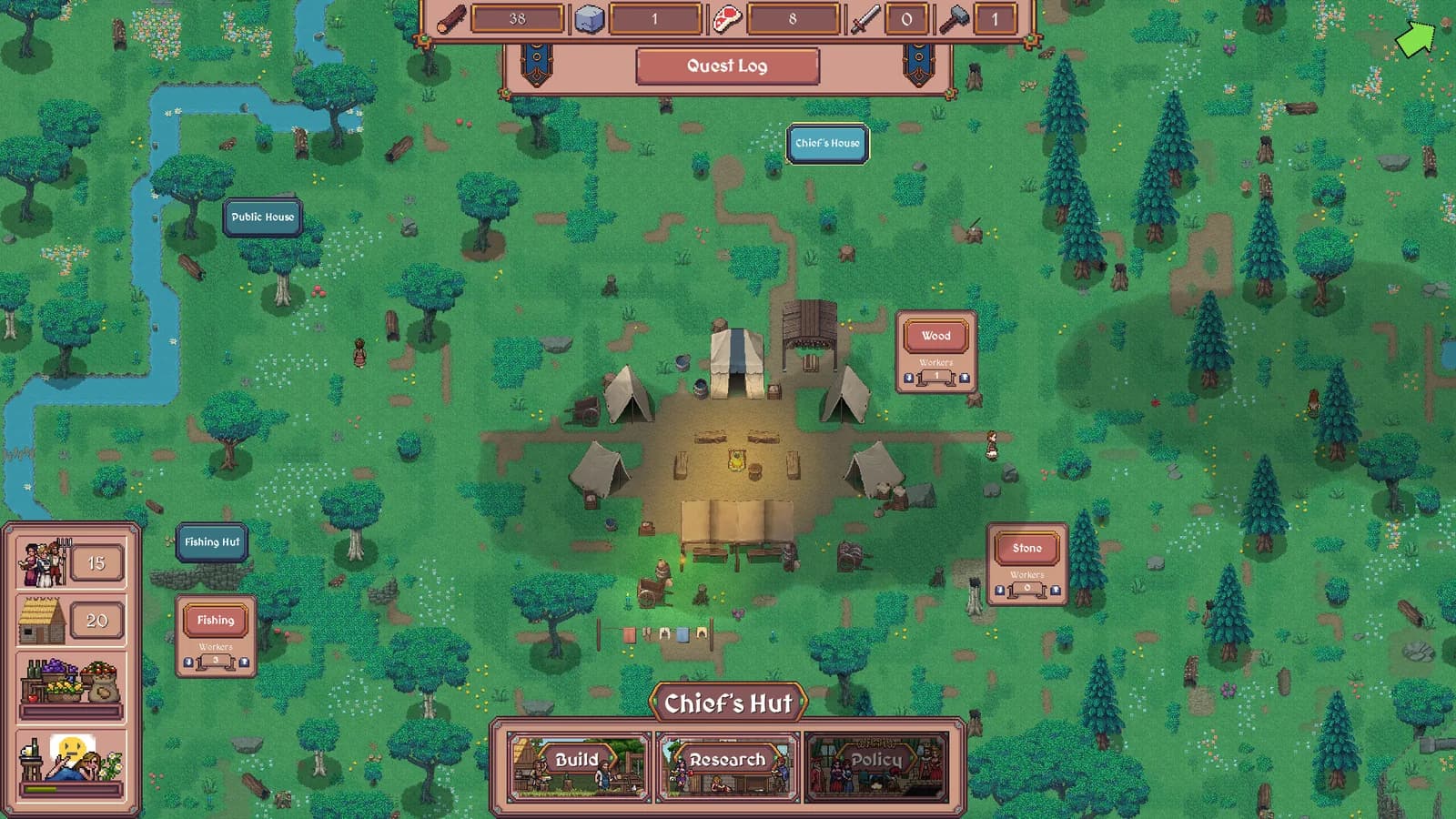
Hearth and Hamlet gives you a growing population and asks you to assign people to different jobs. Population by itself does not solve a bottleneck: workers must be placed where the current kingdom plan needs output.
The strategic constraint is opportunity cost. A worker producing Wood cannot simultaneously fix a Food shortage or accelerate Stone collection. When a new building, research option, or raid preparation changes the next goal, the correct allocation can change immediately.
What drives population growth?
Official and Demo material connect Food stockpiles to population growth. Happiness also provides a production benefit, while policies, taxation, welfare, and defensive choices influence the wider settlement. Exact birth-rate formulas, thresholds, and worker caps are not confirmed for the full game and are deliberately omitted here.
The important loop is:
- Food supports growth.
- Growth creates more potential workers and more demand.
- Assignments convert workers into resource production.
- Buildings and upgrades change capacity and future options.
- Policies and happiness modify how efficiently the kingdom operates.
A repeatable allocation method
| Situation | First response | Check before moving more workers |
|---|---|---|
| Food is falling | Add Food production or pause growth spending | Has the Food direction actually stabilised? |
| A required build lacks one material | Move a small group to that material | Will Food and other required inputs remain positive? |
| Storage is full | Spend, upgrade capacity, or reassign workers | Is production being lost against the cap? |
| A new building unlocks jobs | Staff it gradually | Does it solve the current bottleneck? |
| A raid approaches | Reserve workers and supplies for defense | Which optional project can wait safely? |
Why allocation needs regular review
Demo feedback often mentions worker scarcity and frequent reassignment. That does not mean there is one permanent “best” distribution. Early Wood demand, a Stone-heavy upgrade, Gold progression, or an approaching raid can each justify a different temporary focus.
Move workers in small groups and observe whether the intended resource trend improves before making another change. If Food is declining, stabilize it before treating new population as free labor. If resources are capped, moving additional workers there may waste production until capacity or spending changes.
Demo v1.0.46 rebalanced workers, so ratios from April screenshots or old videos may already be wrong. The Worker Allocation Guide therefore teaches a repeatable decision process rather than publishing unsupported percentages.