The confirmed resource foundation
Hearth and Hamlet is built around turning workers and gathering actions into usable stockpiles. The official description names Food, Wood, Stone, and Gold as core resources, while official screenshots also show Iron and a Magic counter in later settlement screens. Their exact rates and full-release costs are not confirmed yet, but their player-facing roles are already clear enough to plan around.
| Resource | Confirmed role before launch |
|---|---|
| Food | Supports population growth and kingdom upkeep; shortages can constrain expansion |
| Wood | Early gathering and construction material |
| Stone | A construction resource visible in official store material and UI |
| Gold | Economy resource; first became accessible in Demo v1.0.46 |
| Iron | Visible in official later-settlement UI and connected to advanced construction and defense imagery |
| Magic | Advanced progression resource connected to research, the Magic Academy, and magical areas |
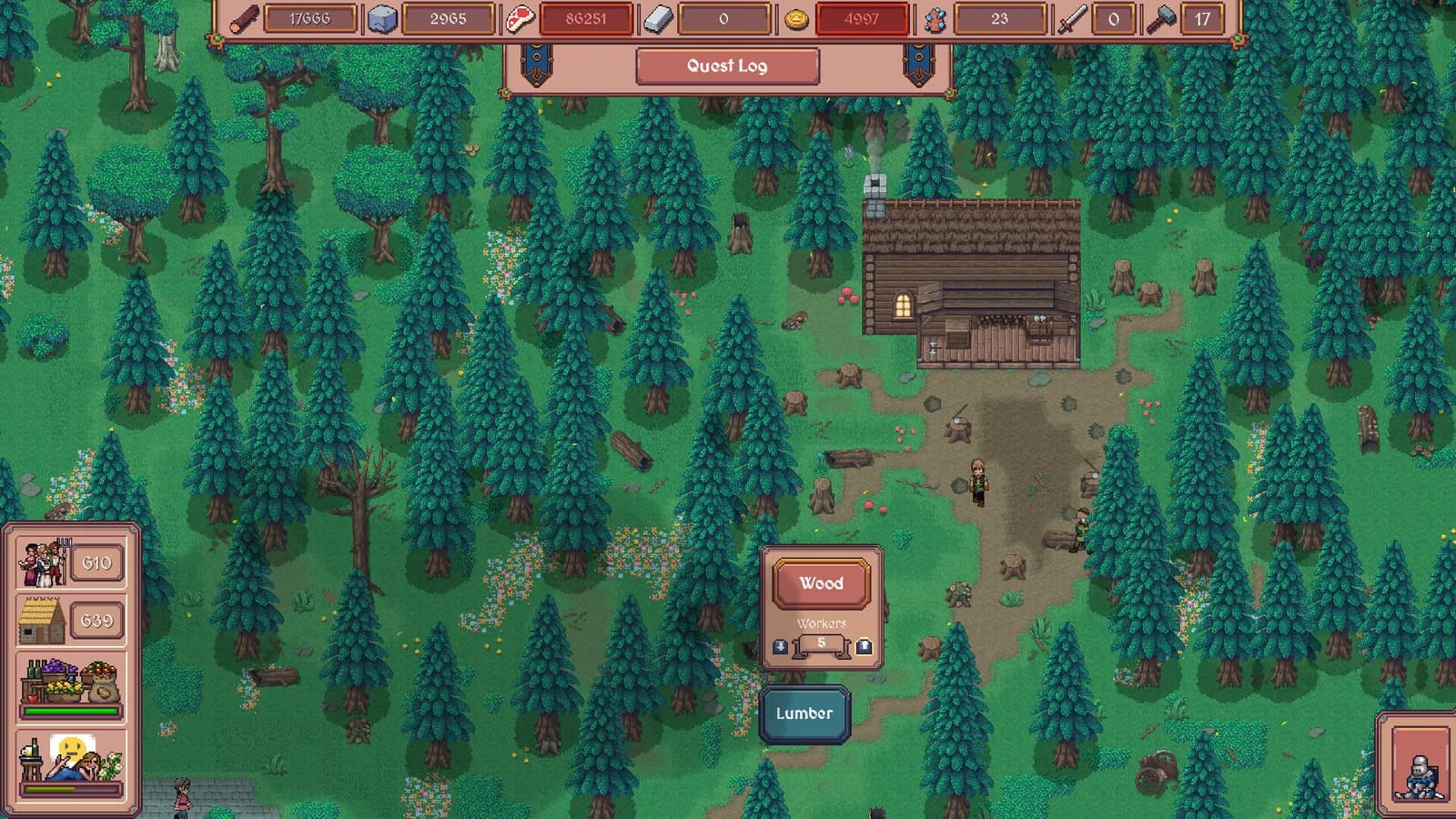
The useful way to read a stockpile is not “which number is largest?” but “which next decision consumes it?” A building upgrade may compete with a research or population need. Moving workers toward one resource increases its flow while reducing production somewhere else. This is why a large total can still hide a weak kingdom.
Diagnose a resource problem
- Look at direction: is the resource rising, stable, falling, or capped?
- Look at demand: which current building, research, policy, expedition, or defense step needs it?
- Look at labour: can workers move here without making Food or another required input collapse?
- Look at capacity: more production is wasted when storage is already full.
- Make one change: move a few workers or delay one purchase, then observe the new trend.
Food is both supply and pressure
Food deserves special attention because official descriptions connect it to a growing population. More villagers provide more labor, but a larger settlement also creates more demand. Demo players repeatedly describe a cycle in which expansion feels safe until population or upkeep turns a thin Food surplus into a shortage.
Avoid copying exact worker ratios from an old build. Instead, watch the direction of the Food balance before committing to another expensive upgrade. The full release may change production rates, costs, and the relative strength of hunting, fishing, and farming.
Gold and later systems
Gold became reachable in Demo v1.0.46 and sits at the centre of trade, taxes, expeditions, advanced upgrades, and defensive spending. It should not be chased in isolation: a kingdom that produces Gold while Food falls or essential construction stops has exchanged one bottleneck for another.
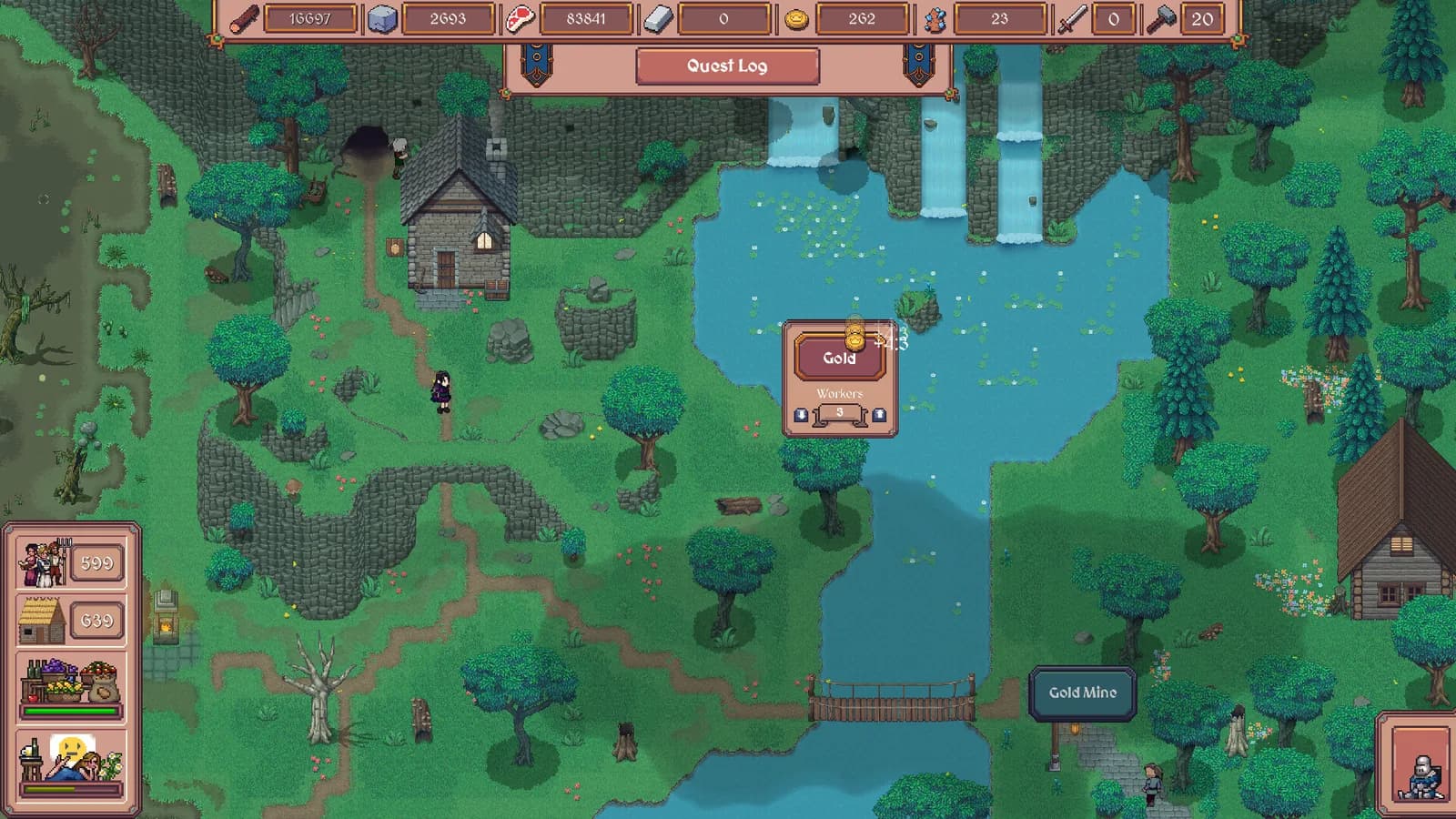
Iron and Magic are visible in official media, but their complete production loops are not public. Use them as evidence of later progression, not as a reason to copy costs or ratios from pre-release screenshots.