From stockpiles to an economy
Official material confirms trade as a major kingdom system. Players can negotiate routes, exchange resources, and use Gold alongside policies and taxation. Demo v1.0.46 offered the first playable access to Gold, but it does not expose every full-release market and route rule.
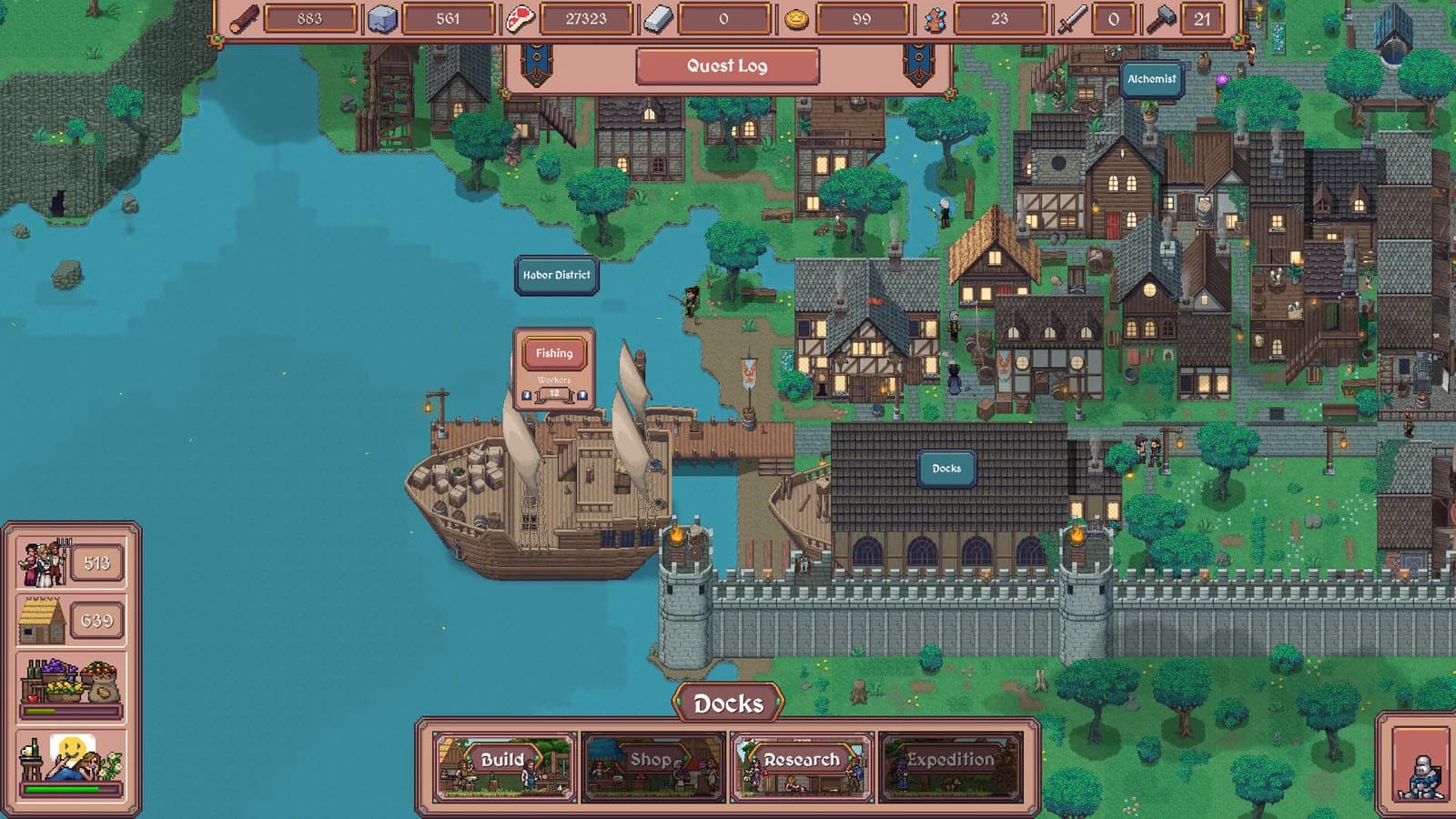
Trade changes the meaning of a surplus. Extra production is no longer useful only for direct construction: it may become an input to exchange, tax policy, or later systems. At the same time, selling a resource that looks abundant can create a shortage when a new upgrade or population increase changes demand.
A safe way to judge a trade
- Identify which resource is truly surplus after near-term construction and upkeep.
- Protect Food from a negative trend before pursuing optional Gold.
- Check whether storage is capping production; trade can create room as well as income.
- Consider worker opportunity cost. A profitable export may consume labor needed elsewhere.
- Re-check the deal when population, policies, or research change.
This framework remains useful even if the release changes exact exchange rates. Static “best trade” tables do not.
Taxes and happiness
Tax belongs to the same economic loop as Gold and production. Official descriptions also connect welfare, resident happiness, and a happiness-based production bonus. Raising income while weakening kingdom-wide output may be a poor exchange, especially during a Food shortage or defense buildup.
What the expedition screen tells us
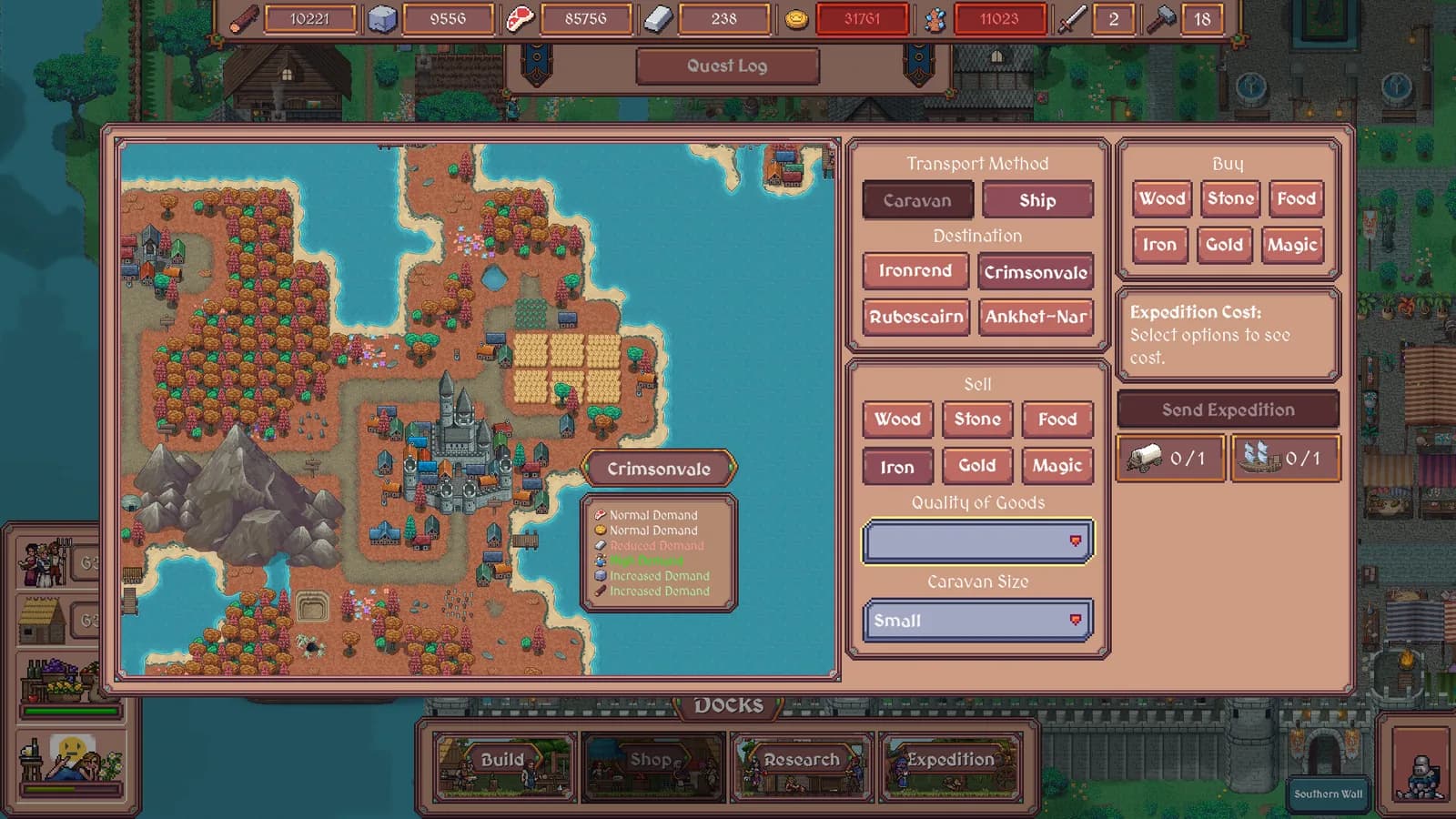
Official media shows several destinations, caravan and ship transport, selectable goods, expedition costs, travel time, and cargo size. Those visible categories establish the decision structure, but the displayed place names, multipliers, costs, and timings are pre-release data. Use the screen to prepare for route planning, not to publish a fixed profitability ranking.